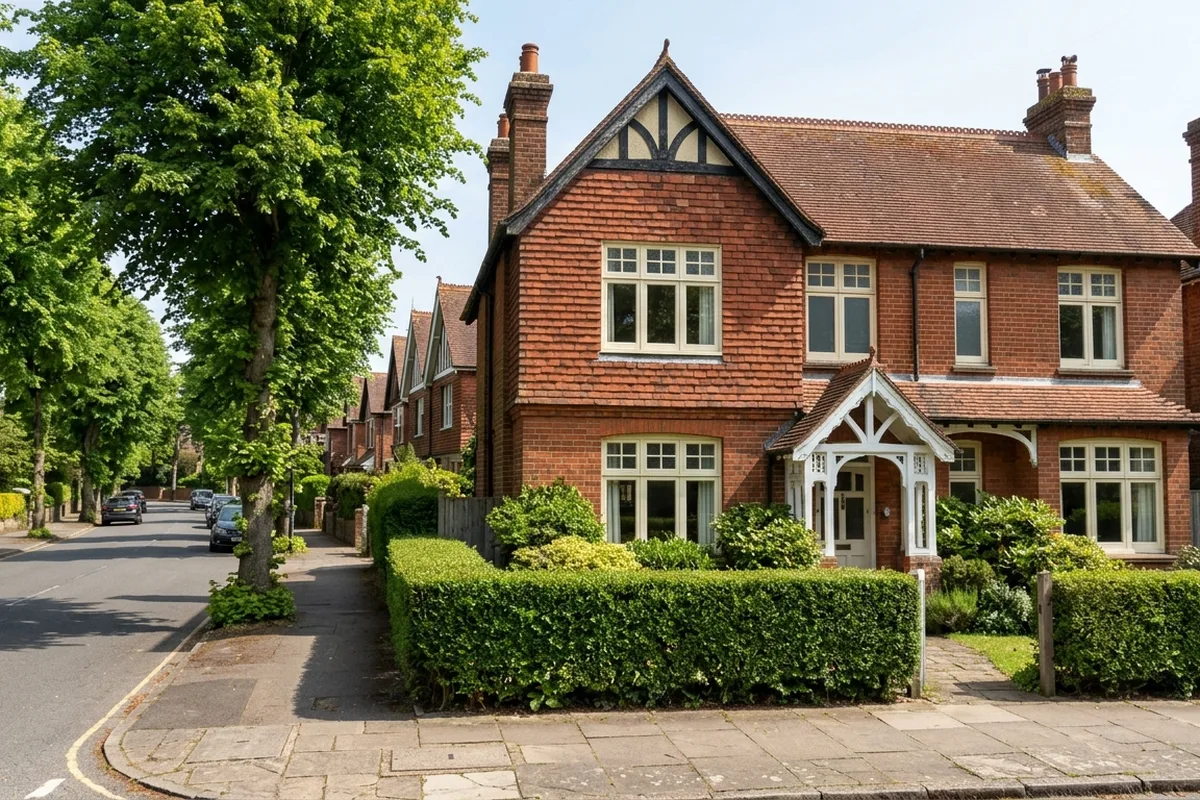
For the red-brick, tile-hung houses built here from the 1890s.
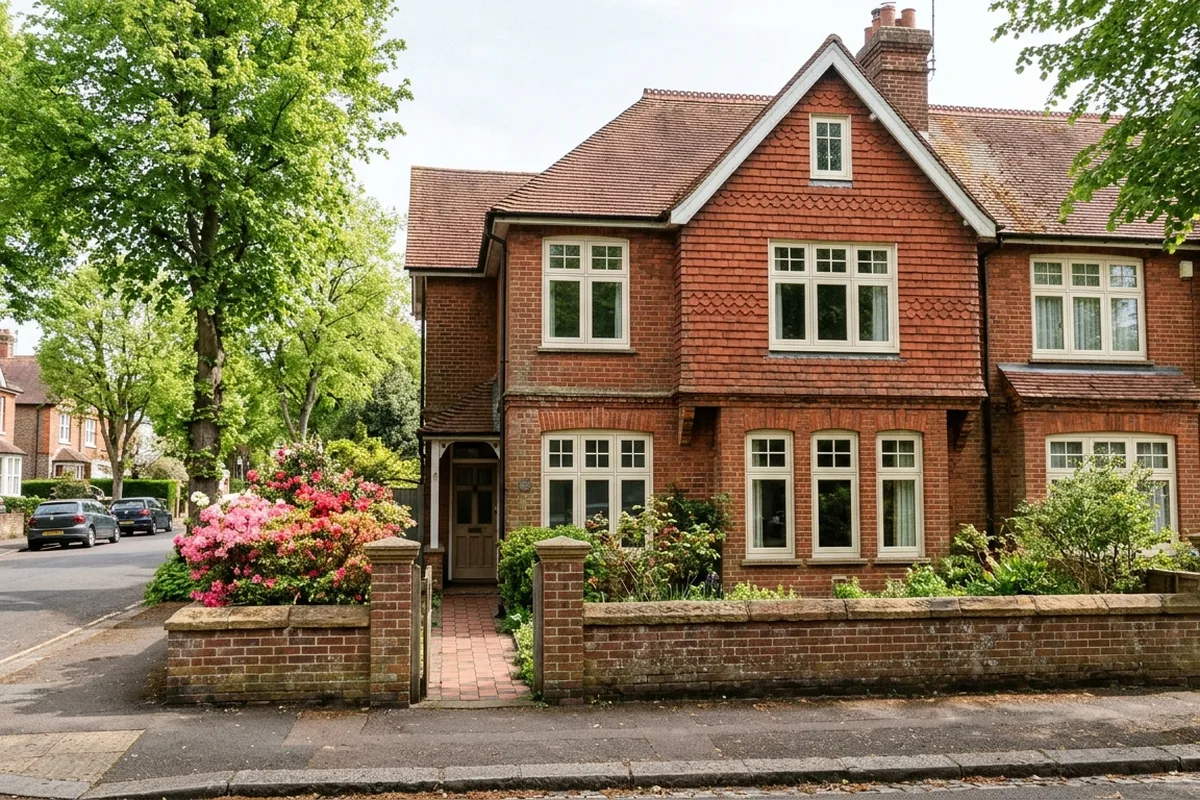
White casements with small-paned top lights on a tile-hung Edwardian house.
The houses
The clearest examples are Madeira Park and Warwick Park. Madeira Park's roads were laid out in 1893 and 39 of its 60 houses were finished before 1914, most of them by the builders Beale and Sons. Warwick Park followed in 1896, with the first houses in 1898 and building going on, a few at a time, until between the wars. The council's appraisal describes the area as red: local red brick, clay tiles, tile-hanging and half-timbered gables.
The same appraisal describes the windows as mostly painted timber, and the commonest type as mullioned and transomed casements with leaded upper lights. You'll see the pattern well beyond those two roads, on Edwardian houses across the town and in Southborough.
What to fit
The thing to keep is the division of the window: a fixed or opening top light above a transom, with small panes, and plain casements below. A uPVC flush casement with bars in the top light does this well. It sits flush in the frame, can be made in cream or a soft colour, and doesn't need painting. Where the originals had leaded lights, a decorative lead or a slim bar pattern in the top light keeps the effect.
Aluminium flush casements give slimmer frames for about a third to a half more than uPVC. Painted timber is what the houses were built with. It's the right choice on a listed house, and the example below shows what it costs against uPVC on the same house.
Planning in Madeira Park and Warwick Park
In June 2019 the council took Madeira Park and Warwick Park out of the main town conservation area and made them a conservation area of their own, with a new appraisal and management plan. That appraisal notes that conservation area status alone doesn't stop windows being changed, and that an Article 4 direction could be used to limit it. We have not found one in force for these roads. Houses here keep their right to replace windows with ones of similar appearance, which is another reason to copy the pattern carefully. Check with the council if you are unsure.
Example: the same house, two ways
Illustrative example of a typical job · Tunbridge Wells
Six flush casements on an Edwardian house, in uPVC
A red-brick Edwardian semi with tile-hung gables in the streets around Warwick Park, where the original windows were painted timber casements with small panes in the upper lights.
Six uPVC flush casements, about 1000 by 1200 mm
Cream outside, white inside, with a transom and astragal bars in the top light to follow the old pattern
Sits flush in the frame like the timber it replaces
Typically £6,600 to £11,700, supplied and fitted, including VAT
Set this beside the timber version of the same job below. The pattern of bars and the flush sash matter more to how the house looks than the material does.