Before choosing a window, settle which of these four describes your home. It takes a few minutes and decides what you can fit.
1. A house that is not listed
Most houses in Tunbridge Wells, including those inside the town's conservation area, have permitted development rights to replace their windows without planning permission. The condition is that the materials used are of similar appearance to the existing ones. Councils read that as being about how the window looks: the pane pattern, the way it opens and its proportions. A well-chosen uPVC flush casement or sash in the right pattern is commonly fitted on this basis. If you are unsure, the council can give a view, or you can apply for a lawful development certificate.
2. A listed building
Listed buildings need listed building consent for any change to their windows, inside or out. Tunbridge Wells has a great many: all 24 villas in Calverley Park are Grade II*, the 17 houses of Calverley Park Crescent are Grade II, and there are listed houses on Mount Sion, in Camden Park and in the centres of Southborough, Pembury, Speldhurst, Langton Green, Rusthall and Bidborough. To check, search your address on the National Heritage List for England at Historic England.
The usual answers for a listed house are timber windows made to match, repairs to the existing windows, or secondary glazing on the inside, which leaves the original window untouched.
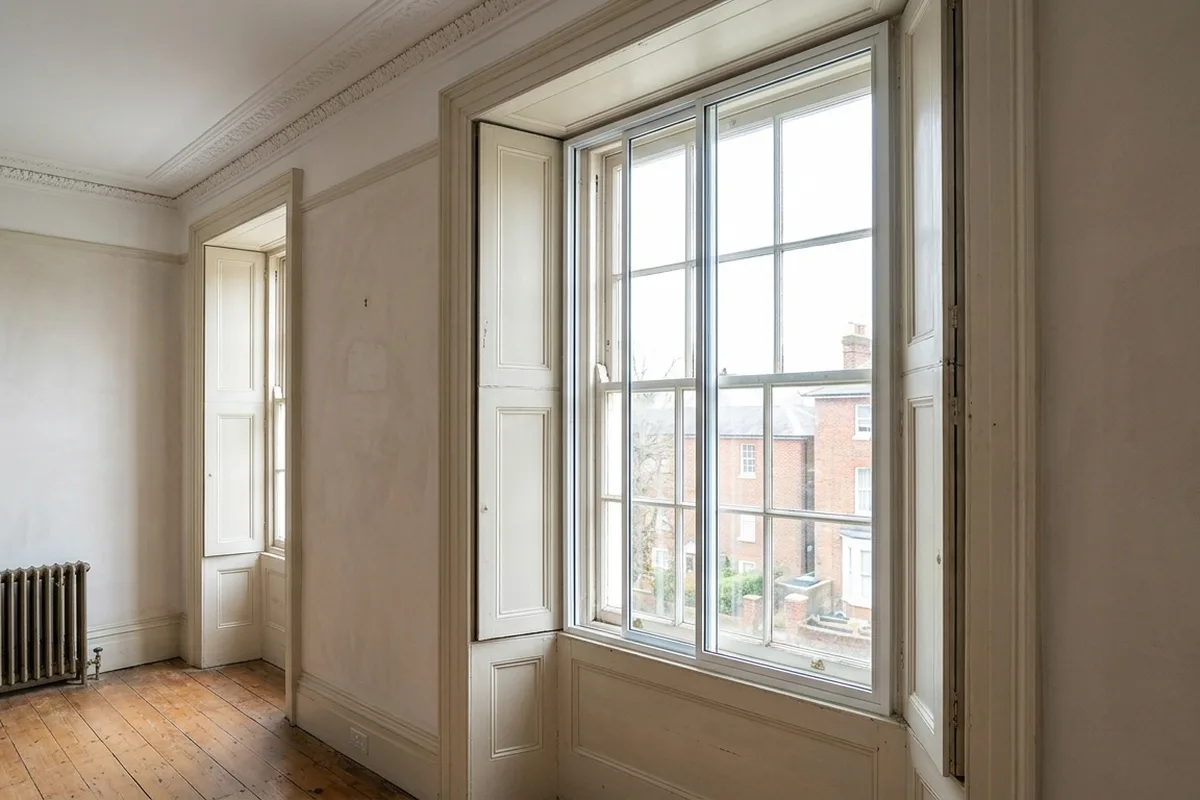
Secondary glazing, indicative market range: a unit for a typical 900 by 1800 mm sash opening is roughly £450 to £1,200 including VAT, supplied and fitted. This is a general market estimate rather than a quote, and listed building consent may still be needed.
3. A flat
Flats have no permitted development rights. If the new windows would differ in style or material from the old ones, you need planning permission. If they would look the same, permission is not normally needed. Many of the large Victorian houses in St James and elsewhere in the town are now flats, so this comes up often. Check your lease too: the freeholder's consent is usually required.
4. A house covered by an Article 4 direction or a planning condition
An Article 4 direction can remove permitted development rights in a defined area. We have not found one in Tunbridge Wells borough that removes the right to replace house windows. The directions the council publishes include one made in 2012 around St James Church, which controls front hard surfaces and front boundary walls, gates and fences, and one made in 2026 on Rusthall Common, which concerns caravan sites. Most of the others on the list are named after single buildings, shops, farms or woods rather than residential streets.
Some newer houses had their permitted development rights removed by a condition on the original planning permission. The planning history on the council's website will show this.
What about the conservation area itself?
The Royal Tunbridge Wells conservation area was designated in 1969 and reviewed in 2000. Being in it does not by itself stop you replacing windows on a house, but the council's appraisals treat poorly matched replacements as harmful to its character. The appraisal for Southborough's Common, for example, describes plastic replacement windows as eroding its character in several places. Matching the pattern is how you avoid being that example.
Building regulations apply in every case. A FENSA-registered installer certifies that the new windows meet them.